
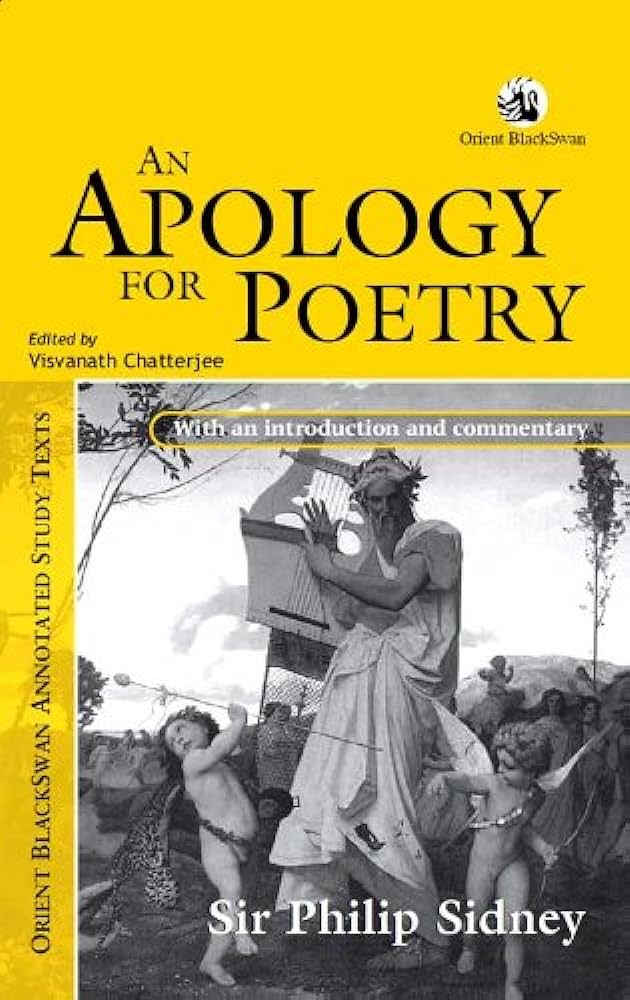
“An Apology for Poetry,” written by Sir Philip Sidney in the late 16th century, stands as a landmark work in the realm of literary criticism. Born in 1554, Sidney was not only a prominent Elizabethan poet, but also a courtier and soldier. His multifaceted background equipped him with a unique perspective on the intersection of art and life, allowing him to articulate a passionate defense of poetry in the face of contemporary skepticism.
The title “An Apology for Poetry” might be misleading to modern readers, as the term “apology” in this context does not imply an admission of guilt or regret. Instead, it refers to a formal defense or justification. Sidney was responding to the critical climate of his time, where poetry was often scorned and dismissed as frivolous, lacking in moral value, and potentially corrupting. The defense Sidney mounts in his work is not a mere apology but a robust vindication of the power and purpose of poetry.
Sidney begins his defense by addressing the main charges against poetry. One of the primary criticisms of poetry during Sidney’s era was its alleged capacity to deceive and corrupt. Some argued that poetry, with its imaginative and fictional nature, could lead individuals away from truth and virtue. In response, Sidney contends that poetry, far from being deceptive, has the ability to convey profound truths in a manner that captivates and engages the reader.
Sidney asserts that poetry, by its very nature, possesses a unique power to reach the human soul and stir the emotions. He likens poets to ancient prophets, suggesting that they have the ability to inspire and instruct. In Sidney’s view, poetry is not divorced from truth but is a powerful vehicle for expressing truth in a way that resonates deeply with the human experience.
Moreover, Sidney argues that poetry has an ethical dimension that extends beyond didacticism. He contends that poetry has the capacity to shape moral character and instill virtue in its audience. The emotional impact of poetry, according to Sidney, can evoke a response that goes beyond mere intellectual understanding, leading to a more profound internalization of ethical principles.
To reinforce his defense, Sidney distinguishes between different types of poetry. He acknowledges that there is a form of poetry that may be purely for entertainment, but he insists that even such poetry serves a valuable purpose. He introduces the idea of the “poet as a maker” or “maker of things,” emphasizing the creative and transformative power of poetry. In Sidney’s vision, the poet is not merely an imitator but a creator who participates in the divine act of creation.
Sidney’s defense of poetry is not confined to its moral and didactic functions; he also celebrates its aesthetic qualities. He discusses the role of imagination and the poetic “wit” in crafting beautiful and moving works. Sidney argues that poetry, through its use of metaphor and vivid imagery, has the ability to illuminate and enhance the understanding of complex ideas.
The cultural and historical context of “An Apology for Poetry” is crucial to understanding Sidney’s arguments. The Renaissance was a period marked by a renewed interest in classical literature and learning. The humanists of the time, including Sidney, were deeply influenced by the works of ancient Greek and Roman writers. Sidney draws on this classical tradition to underscore the elevated status of poetry as a form of artistic expression.
In addition to his defense of poetry, Sidney offers a critique of other literary forms, particularly the burgeoning prose fiction of his time. He contends that prose fiction lacks the imaginative and transformative power inherent in poetry. While prose may serve as a vehicle for conveying information and moral lessons, Sidney argues that it falls short in its ability to move and inspire the audience on a deep emotional level.
Sidney’s “An Apology for Poetry” is a rich and multifaceted work that combines literary criticism, philosophy, and a deep appreciation for the arts. His arguments are not only a product of his time but also resonate with enduring questions about the nature and purpose of literature. The work has left a lasting impact on subsequent generations of poets, critics, and scholars, influencing the development of literary theory and shaping discussions on the value of poetry in the centuries that followed.