
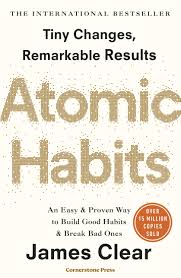
James Clear’s Atomic Habits has become one of the most influential self-improvement books of recent years. It provides a practical framework for making small changes that lead to remarkable results over time. Instead of relying on motivation or willpower, Clear focuses on building systems and improving habits at an atomic level—small, consistent actions that compound into major life transformations.
This article explores the core principles of Atomic Habits, breaking down its key concepts, actionable strategies, and real-world applications.
Key Concepts in Atomic Habits
James Clear introduces a powerful approach to habit formation based on the following core ideas:
1. The Power of Tiny Changes
The central theme of Atomic Habits is that small, incremental changes—what Clear calls “atomic habits”—can lead to significant improvements over time. He explains that we often underestimate the power of tiny changes because they don’t produce immediate results. However, just like compound interest, small habits accumulate into extraordinary outcomes.
Example:
- If you improve just 1% each day, you will be 37 times better in a year.
- Conversely, if you decline by 1% daily, your progress will deteriorate significantly.
This principle highlights why focusing on small but consistent progress is more effective than making drastic changes that are hard to sustain.
2. Identity-Based Habits
Rather than setting goals, Clear encourages focusing on identity. He argues that true habit change happens when we shift our identity rather than just our behavior.
Example:
- Instead of saying, “I want to run a marathon,” say, “I am a runner.”
- Instead of saying, “I want to eat healthy,” say, “I am a healthy eater.”
By adopting an identity that aligns with your desired habits, it becomes easier to make choices that reinforce that identity.
3. The Four Laws of Behavior Change
Clear provides a simple, science-backed method for creating good habits and breaking bad ones. He calls this the Four Laws of Behavior Change:
Creating Good Habits:
- Make it obvious – Design your environment to make good habits easy and visible. (Example: Keep a water bottle on your desk to encourage hydration.)
- Make it attractive – Use temptation bundling or rewards to make habits more appealing. (Example: Listen to your favorite podcast only when exercising.)
- Make it easy – Reduce friction so that habits require minimal effort. (Example: Lay out workout clothes the night before.)
- Make it satisfying – Use immediate rewards to reinforce good behavior. (Example: Track progress on a habit tracker.)
Breaking Bad Habits:
- Make it invisible – Remove cues that trigger bad habits. (Example: Keep junk food out of sight.)
- Make it unattractive – Reframe your mindset to see the negative consequences of bad habits. (Example: Focus on the health risks of smoking.)
- Make it difficult – Increase friction so that bad habits require more effort. (Example: Delete social media apps to reduce screen time.)
- Make it unsatisfying – Use accountability to discourage bad behavior. (Example: Tell a friend your goal and ask them to check on your progress.)
Actionable Strategies from Atomic Habits
1. Habit Stacking
Habit stacking involves pairing a new habit with an existing one. This technique helps integrate new behaviors into your routine seamlessly.
Formula:
“After [current habit], I will [new habit].”
Examples:
- After brushing my teeth, I will floss one tooth.
- After pouring my morning coffee, I will meditate for one minute.
By linking habits together, you create a natural flow that makes them easier to maintain.
2. The Two-Minute Rule
The Two-Minute Rule states that when starting a new habit, make it so easy that it takes less than two minutes to do. This lowers resistance and builds momentum.
Examples:
- Instead of “Read more books,” start with “Read one page per day.”
- Instead of “Exercise daily,” start with “Put on my running shoes.”
Once you establish the routine, you can naturally scale up the habit.
3. The Goldilocks Rule
Clear highlights that habits should be challenging but not too difficult. If an activity is too easy, we get bored. If it’s too hard, we get discouraged. The ideal difficulty level is when the task is just outside your comfort zone—challenging but achievable.
4. Environment Design
Your environment plays a crucial role in habit formation. By shaping your surroundings, you can make good habits easier and bad habits harder.
Examples:
- If you want to eat healthier, keep fresh fruits on your kitchen counter.
- If you want to read more, place a book on your bedside table.
- If you want to limit phone use, charge your phone in another room at night.
The Impact of Atomic Habits
1. Personal Growth
By applying the principles of Atomic Habits, individuals can build consistency in fitness, productivity, learning, and other areas of life. The focus on small wins makes self-improvement feel more achievable.
2. Workplace Productivity
Organizations and businesses can benefit from Clear’s principles by creating better workflows and reducing inefficiencies. Employees who implement small, consistent improvements in their routines can achieve significant productivity gains over time.
3. Health and Wellness
From better sleep habits to sustainable weight loss, Atomic Habits provides a roadmap for lasting health improvements. Many people struggle with extreme diets and intense workout regimens; Clear’s approach focuses on gradual, lifelong change instead.
Final Thoughts on Atomic Habits
James Clear’s Atomic Habits is more than just a self-help book—it’s a blueprint for long-term transformation. By focusing on small, daily improvements and system-based thinking, anyone can break free from bad habits and build lasting success.
If you’re looking to improve any aspect of your life—whether personal, professional, or health-related—this book offers a practical and research-backed strategy to help you succeed.