
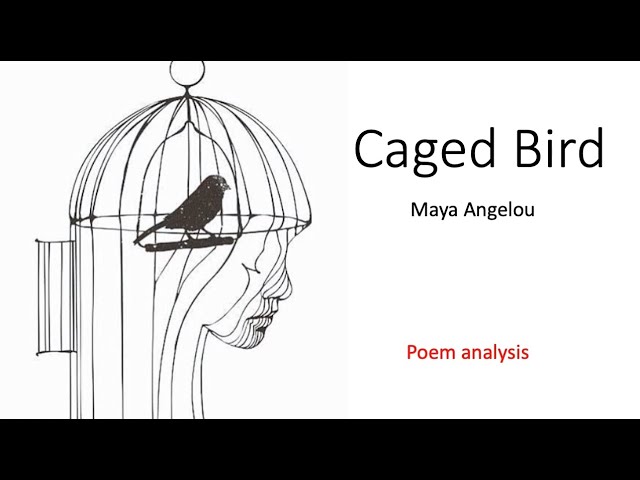
“Caged Bird” is a poignant and powerful poem written by Maya Angelou, one of the most influential and celebrated poets of the 20th century. This work is part of her autobiography “I Know Why the Caged Bird Sings,” published in 1969. The poem is an evocative exploration of themes such as freedom, oppression, and the indomitable human spirit.
Caged Bird by Maya Angelou
A free bird leaps on the back of the wind and floats downstream till the current ends and dips his wing in the orange sun rays and dares to claim the sky.
But a bird that stalks down his narrow cage can seldom see through his bars of rage his wings are clipped and his feet are tied so he opens his throat to sing.
The caged bird sings with fearful trill of the things unknown but longed for still and his tune is heard on the distant hill for the caged bird sings of freedom.
The free bird thinks of another breeze and the trade winds soft through the sighing trees and the fat worms waiting on a dawn bright lawn and he names the sky his own.
But a caged bird stands on the grave of dreams his shadow shouts on a nightmare scream his wings are clipped and his feet are tied so he opens his throat to sing.
The caged bird sings with a fearful trill of things unknown but longed for still and his tune is heard on the distant hill for the caged bird sings of freedom.
The poem is characterized by its vivid imagery and profound metaphorical language, allowing readers to delve into the complexities of the human condition. The “free bird” and the “caged bird” become powerful symbols, representing the contrasting experiences of liberty and confinement.
In the first stanza, the “free bird” is described as leaping on the back of the wind, floating downstream, and daring to claim the sky. This vivid imagery conjures a sense of boundless freedom and unrestrained joy. The bird is free to explore the world, dip its wings in the sun, and embrace the vastness of the sky.
Conversely, the “caged bird” in the second stanza is confined to a narrow cage. The imagery shifts to convey a sense of imprisonment—the bird’s view obstructed by bars, its wings clipped, and its feet tied. Despite these limitations, the caged bird opens its throat to sing, revealing a powerful resilience in the face of adversity.
The refrain “The caged bird sings / with a fearful trill / of things unknown / but longed for still” underscores the profound longing for freedom and the expression of this desire through song. The caged bird’s song becomes a poignant anthem, a testament to the enduring human spirit that persists even in the most challenging circumstances.
In the third stanza, the free bird’s thoughts are juxtaposed with those of the caged bird. The free bird envisions another breeze, trade winds, and the delights of a dawn bright lawn. The bird claims the sky as its own, emphasizing the ownership and mastery of its environment. The contrast between the freedom of the open sky and the confines of a cage is stark, highlighting the disparity in life experiences.
The final stanza returns to the caged bird, standing on the grave of dreams, with its wings clipped and its feet tied. The shadow of the caged bird “shouts on a nightmare scream,” conveying the harsh reality of its existence. Despite the anguish, the caged bird continues to sing, and its tune resonates on the distant hill, symbolizing the universal yearning for freedom.
Maya Angelou’s “Caged Bird” is a masterful exploration of the human spirit’s capacity for resilience and the innate desire for freedom. The metaphor of the caged bird resonates deeply, capturing the essence of the struggles faced by those who are oppressed or confined. Through the poem’s lyrical and emotive language, Angelou invites readers to reflect on the profound impact of societal constraints on individual lives and the enduring strength found in the pursuit of freedom and self-expression. “Caged Bird” stands as a testament to Maya Angelou’s ability to use poetry as a means of conveying universal truths and inspiring readers to contemplate the complexities of the human experience.