
The period of German history from 1945 to 1990 was a time of significant political and social change. Here are some key events and developments from this time:
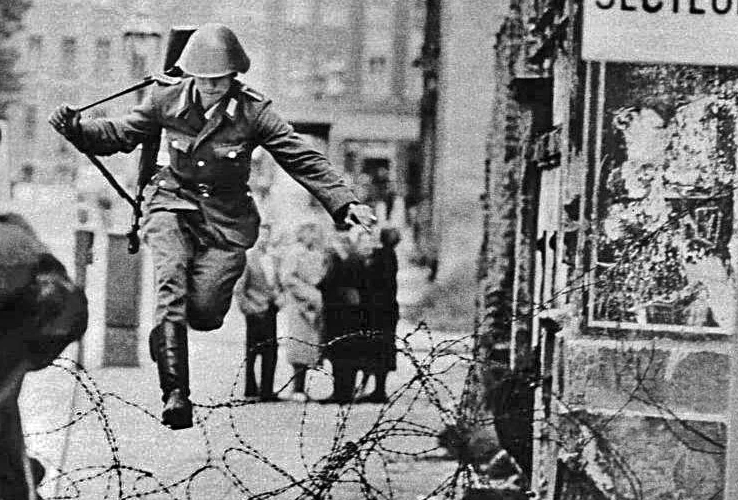
- Division of Germany: Following the end of World War II, Germany was divided into two separate countries, East Germany (German Democratic Republic) and West Germany (Federal Republic of Germany), separated by the Berlin Wall.
- Economic Miracle: West Germany experienced a period of rapid economic growth, known as the “Wirtschaftswunder” (economic miracle), which was fueled by investments from the United States and other Western countries.
- Cold War Tensions: As East and West Germany became increasingly polarized, tensions between the Soviet Union and the United States led to the Cold War. The Berlin Wall, built in 1961, became a symbol of the divided country and the Cold War itself.
- Student Protests: In the late 1960s, students in West Germany began protesting against what they saw as an oppressive government and society. This led to a broader cultural revolution that challenged traditional German values and authority.
- German Reunification: The fall of the Berlin Wall in 1989 and the subsequent collapse of the Soviet Union paved the way for the reunification of Germany in 1990.
- Adenauer Era: Konrad Adenauer served as Chancellor of West Germany from 1949 to 1963, overseeing much of the country’s post-war reconstruction and the economic miracle.
- Brandt Era: Willy Brandt served as Chancellor of West Germany from 1969 to 1974 and implemented policies aimed at easing tensions with East Germany and the Soviet Union, including the famous “Ostpolitik.”
- Fall of the Berlin Wall: The fall of the Berlin Wall in November 1989 was a historic moment that marked the beginning of the end of the Cold War and the reunification of Germany.
- Reunification of Germany: The reunification of Germany in 1990 marked the end of the division of the country and the beginning of a new era in German history.
Overall, the period from 1945 to 1990 was a time of significant change and transformation for Germany, as the country emerged from the shadow of World War II and began to rebuild and establish itself as a major economic and political power in Europe. The division and subsequent reunification of the country played a central role in shaping the course of German history during this period.