
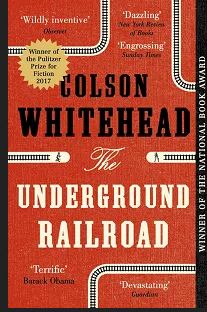
Title: The Underground Railroad Author: Colson Whitehead Published: 2016 Genre: Historical Fiction
“The Underground Railroad” by Colson Whitehead is a powerful and thought-provoking novel that weaves history and allegory to explore the enduring legacy of slavery in America. It has received critical acclaim and numerous awards, including the Pulitzer Prize for Fiction in 2017. The novel is a significant work that resonates with readers for its compelling characters, vivid prose, and its exploration of the human spirit’s capacity for resistance and resilience.
Plot Overview: The novel centers around the life of Cora, a young African American woman born into slavery on a Georgia plantation. Her life is marked by brutality, oppression, and a desperate yearning for freedom. When she meets Caesar, another enslaved person, they decide to escape together via the Underground Railroad, a secret network of safe houses and routes that facilitated the escape of enslaved people to the North.
In Whitehead’s novel, the Underground Railroad is not a mere metaphor but a literal subterranean railway system. This imaginative twist serves as a powerful allegory for the perilous journey to freedom. Each stop on the railroad represents a different state of the American South, offering a unique perspective on the various forms of racism, discrimination, and violence that African Americans faced during the era of slavery.
As Cora and Caesar journey through different states, they encounter both allies and adversaries. Whitehead’s portrayal of these characters is nuanced, highlighting the complexity of human nature and the varying degrees of complicity and resistance exhibited by individuals in the face of systemic injustice.
- The Legacy of Slavery: “The Underground Railroad” explores the enduring impact of slavery on American society. Whitehead skillfully illustrates how the scars of slavery are not confined to the past but continue to shape the present. The novel prompts readers to reflect on the deep-rooted racism and inequality that persist in the United States.
- Freedom and Identity: Cora’s journey is not only a physical escape from bondage but also a quest to define her own identity and destiny. The novel grapples with the complexities of freedom and the challenges of forging one’s path in a world marked by prejudice and injustice.
- Resilience and Survival: Throughout the novel, Cora demonstrates remarkable resilience and determination in the face of adversity. Her character symbolizes the indomitable spirit of those who resisted slavery and fought for their rights.
- The Underground Railroad as a Metaphor: Whitehead’s use of the Underground Railroad as a literal, physical entity adds a layer of allegory to the narrative. It represents the collective effort to escape oppression and serves as a symbol of hope and the pursuit of a better life.
- The Role of Memory: The novel also delves into the importance of remembering history and acknowledging the painful truths of the past. It challenges the selective amnesia that often surrounds discussions of slavery and its aftermath.
Narrative Style and Writing: Colson Whitehead’s prose in “The Underground Railroad” is both evocative and lyrical. He masterfully combines historical realism with elements of magical realism, creating a world that is both grounded in historical fact and infused with a sense of the surreal. The novel’s unique structure, with each stop on the Underground Railroad representing a different state, allows Whitehead to explore various facets of the American experience.
Whitehead’s ability to create complex, multi-dimensional characters is a hallmark of his writing. Cora is a compelling and resilient protagonist, but she is surrounded by a cast of characters who add depth and complexity to the narrative, reflecting the diverse perspectives and motivations of individuals caught in the web of slavery and its aftermath.
Impact and Reception: “The Underground Railroad” received widespread acclaim from critics and readers alike. It won the Pulitzer Prize for Fiction in 2017 and was selected for Oprah’s Book Club. The novel’s exploration of race, history, and the enduring struggle for justice resonated with audiences and sparked important conversations about the legacy of slavery in America.
In addition to its literary accolades, “The Underground Railroad” has been praised for its relevance to contemporary discussions on racial inequality and social justice. Whitehead’s novel serves as a poignant reminder that the issues of the past continue to shape the present and that the fight for justice is an ongoing journey.
Conclusion: “The Underground Railroad” by Colson Whitehead is a remarkable work of historical fiction that combines imaginative storytelling with a deep exploration of the legacy of slavery in America. Through its powerful characters, allegorical elements, and vivid prose, the novel invites readers to confront uncomfortable truths about the past while also offering a message of hope and resilience. It stands as a significant contribution to literature and a compelling narrative that continues to captivate and educate readers about a critical period in American history.